Website: https://cuidadosdignos.org/
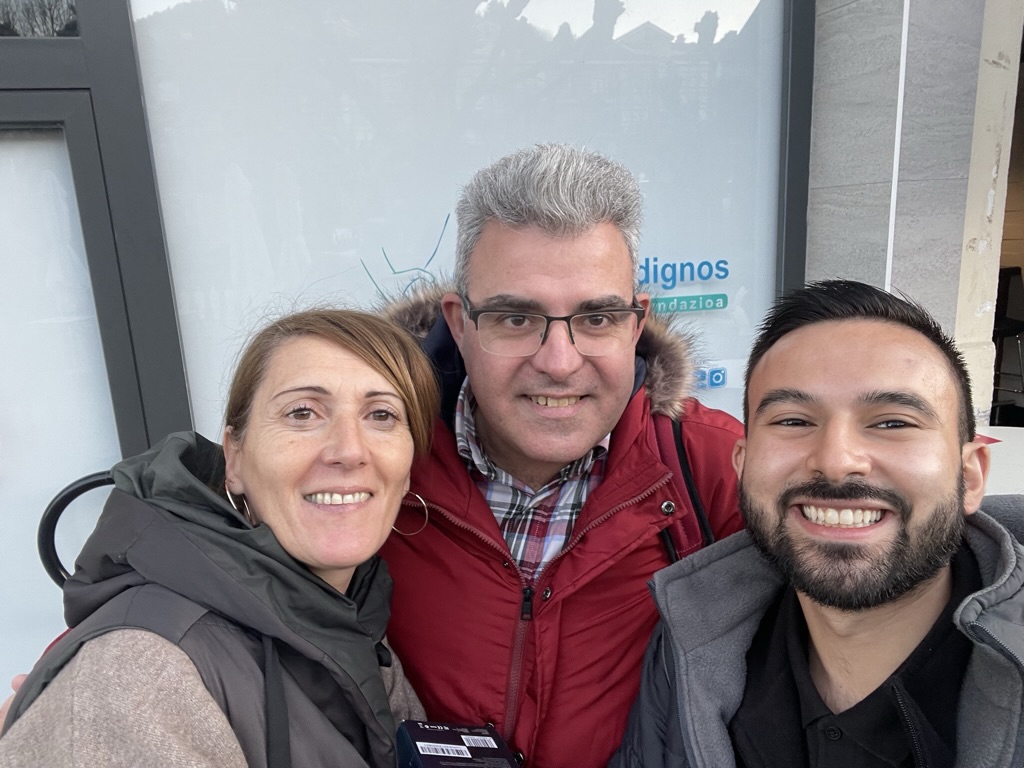
My time in Spain has radically challenged me and made me reflect deeply on what I consider dignity. It is such a complex concept and word that I have been fortunate to grapple with further here at this foundation – Fundacion Cuidados Dignos. They help care facilities understand that another way is possible to provide care without physical and chemical restraints. They are based up North of Spain in Gernika, but work all throughout Spain.
Their mission statement: “Sensitize and promote the development of the Quality of Life of People Cared for, among the different social agents who are in contact with them, care professionals, family members or representatives and public agencies; through the research, creation and dissemination of new methods of care. Training for professional and non-professional caregivers as an essential pillar to achieve changes and improvements in the quality of life of the people cared for.”
When our older adults are in a care home and are heavily medicated something is wrong. It is known that older adults are at times over-medicated since doctors are still working based on an old model of care. Therefore, when I heard about their organization I was inspired. I’ve seen people physically or chemically restrained at some point. I knew we could do it another way, but I never envisioned how until now. Dr. Ana Urrutia, founder and president of Cuidados Dignos, is fighting against the standards that have systematically stayed in the system, and people still follow, as some say it is too hard to break from the standard. She and her team have shown me another way to help sustain the change by educating the staff and families of care settings.
She developed the Norma-Libare Care Model, which one is able to obtain after undergoing a rigorous evaluation and training. They do an initial evaluation accessing where the care facility currently is with their care and then develop a plan to improve certain aspects of the care centered around non-pharmacological intervention and preserving older persons dignity. This cultural change is not fast but takes anywhere from six months to years. Throughout this time her team is educating and providing training sessions to the executive team of the care home and all the personnel. It is a holistic training to ensure everyone understands. Once a facility receives this certification, the foundation does an annual audit, ensuring the same standards are being followed as before. Although this model is person centered it adds a deeper layer to the work by educating the care staff and ensuring they understand. This is something that intrigued me as I know that some care homes when hiring staff do not give any educational resources. And as a third-party they view things quite differently that the care home might not see.
They are setting the foundation for long term change after the training sessions for the care staff and others. Despite the turn over rate that occurs in care homes, these types of intervention stay with the individual. I know during my conversation, months from now I will still remember the emotions and profound hope they gave me. They were able to help me understand we can and we must do care differently.
They also have a training program online that you can sign up for a certain amount: https://formacion.cuidadosdignos.org/ Again, they are making their information available for a broader audience to learn and understand. Another unique thing about them is that they themselves are also doing self-evaluations about what dignity is and how we can do better within their formations and audits.
Dr. Urrutia also published a book that deeply moved me – Cuidar. It is available only in Spanish and my hope is that it will be in English. She was very honest about her formation and reflected on her career. While she was becoming a doctor she thought she had to provide certain medications based on the model of care she learned in school but she dived deeper and reflected and realized medication is not always the key to everything. We have to keep humanizing the care we provide and see how we are empowering staff and families. Their model provides another perspective of how to hold one another accountable, by bringing a third-party.
The book and conversation I had with the team deeply moved me as in the past year my grandmother was given a new medication. I talked to her neurologist and questioned him about giving her another medication that I felt she did not need. Yet, he prescribed her the medication with in the end she stopped taking it since it had no effect. Therefore, when I heard this foundation strives to ensure we take what we have to take for the benefit of our health I was very intrigued. Additionally, the book shares some personal stories throughout her career and highlights how we are able to care differently.
We need to keep striving to understand who is in our care homes. We need to listen and uphold our resident’s autonomy, dignity, and voice.
I am grateful for my time with them and what I learned. They added another layer to my understanding of how we might need to consider creating a third-party evaluator to access the care being provided in facilities. Despite the inspections that occur, the inspectors fail at times to capture certain things or understand the environment. We need to ensure we hold one another accountable in the realm of care homes to ensure we provide dignified care. Our inspectors should have some type of gerontological training and involve more interaction with the residents to ask questions.
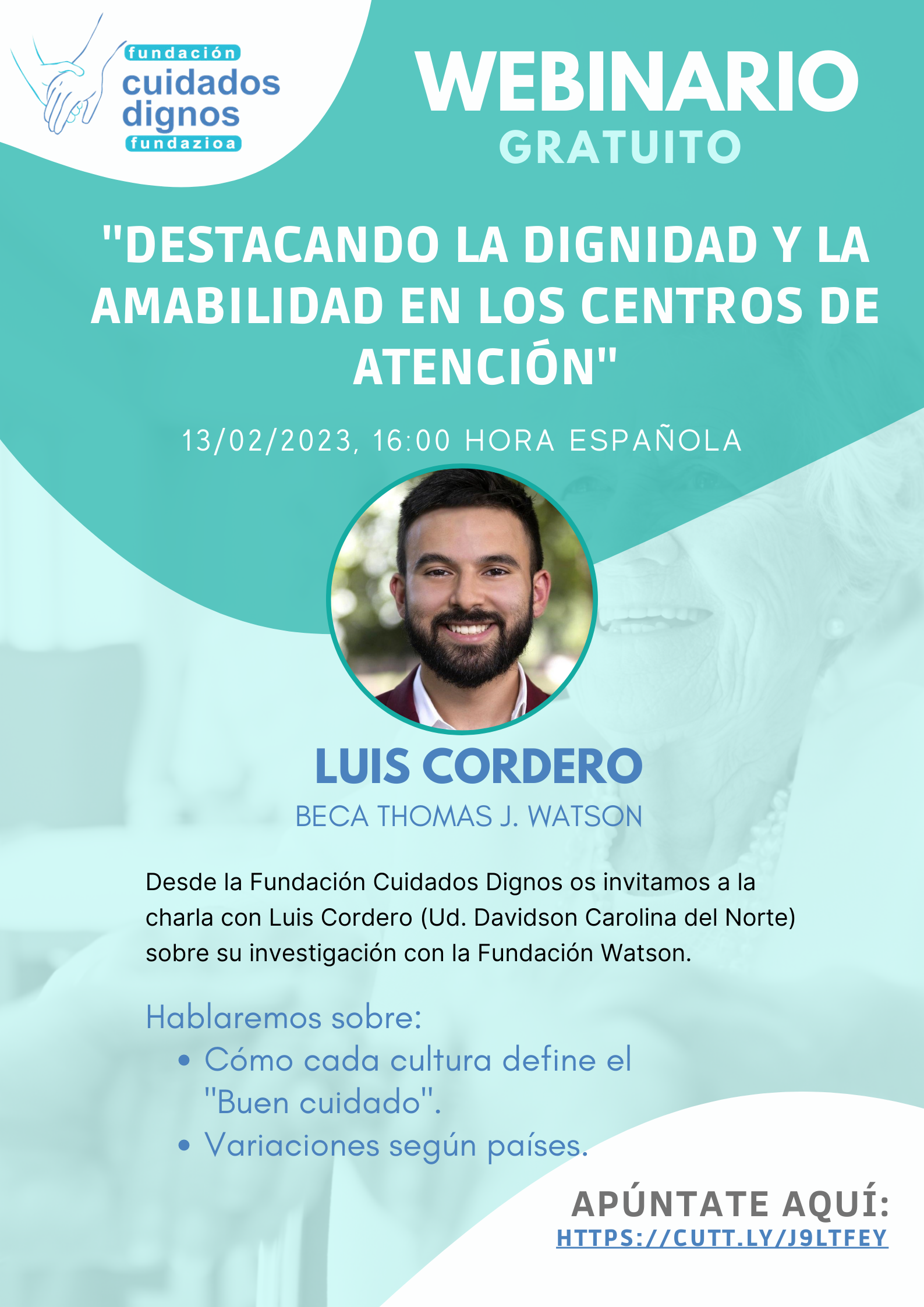
I also gave a webinar talk with them to share my work from other Spanish-speaking countries and Brazil. I am grateful for the opportunity as this allowed me to connect with others in Spain. I look forward to the next time we connect.
Gracias a vosotras y vosotoros de Fundacion Cuidados Dignos!!
Flyer of Webinar Talk in Spanish: