Website: https://communityhomeaustralia.org/
After visiting ten countries certain ideas arose throughout my travels speaking to various older adults. One major component that surfaced was the community aspect and CHA does this well compared to other institutions that I visited. They are consistently inviting and partnering with new organizations and allowing the community into the space to create awareness. Their location is in front of a super busy plaza which offers the surrounding region to inquire about them. They created a community garden with a street library again to be able to add to the community and spark their curiosity. Now people are able to sit by as they walk and inquire about what CHA is and how they can be supported.
I was also deeply moved to see how everyone brings in their own individual story and leverages that as their super-power. They are authentically themselves and appreciated for that and heard by the administration in order to foster the unique and inclusive space they have. Each person on staff has one goal and that is to support people living with dementia.
Check out this paper for further information about key components of their care model. They are summarized below:
Community Home Model Pillars:
- Respect for the individual
- Independence and de-instionalisation
- Enablement and support through practice and IT
- Community Connection
- Expertise and specialization
- Saff Value
Each of these components is crucial in creating and fostering a continuation of life. I highlight the first component of respect for the individual as this tends to lack within the care industry. Providers do better at making that known but not actually following it. Here at CHA they know the individual as if they are family and not just one person but the team. It is a team effort and it is clear how much they value and respect one another.
I emphasize the staff value component as I am back in America working for one of the major hospitals and have noticed the major difference in benefits and appreciate that CHA also offers yet within our field of care we fail to have across the board in every country I visited. For example, staff are consistently recognized for their hard work and creativity. They are not belittled or put down but affirmed and encouraged to speak their truth and use their creativity. I witnessed how one person proposed an idea and then we were building the space and buying decorations to decorate the space and see the vision come to life.
The key component that universally sets them apart is that the community is invited to come in and join in on the fun that is being created with residents and for them. They are a site drop off of winter clothes that are sorted by them and then delivered to those who need them. Another partnership they have is refurbishing things from the GreenShed where they use it now in the Day Center or at home. I was deeply inspired to witness this as PLWD tend to want to buy everything and anything and in this space they can take anything and everything they desire without being pushed that they cannot. CHA is an integral community member and their members are connected by going on walks and still sustaining that interaction. This is important
Community Home Australia has been successful in not only having the right team, but also the right environment. They give the members and guests the opportunity to decide. They are eating meals that they would want and drinking things that they desire. They are not simply being handed things to them, but having the liberty to decide which is not often the case in the senior sector. Below I go into further details about the current spaces they have and my reflections during my two-week visitation with them talking to various employees, members, guests, and families.
Club Kalina
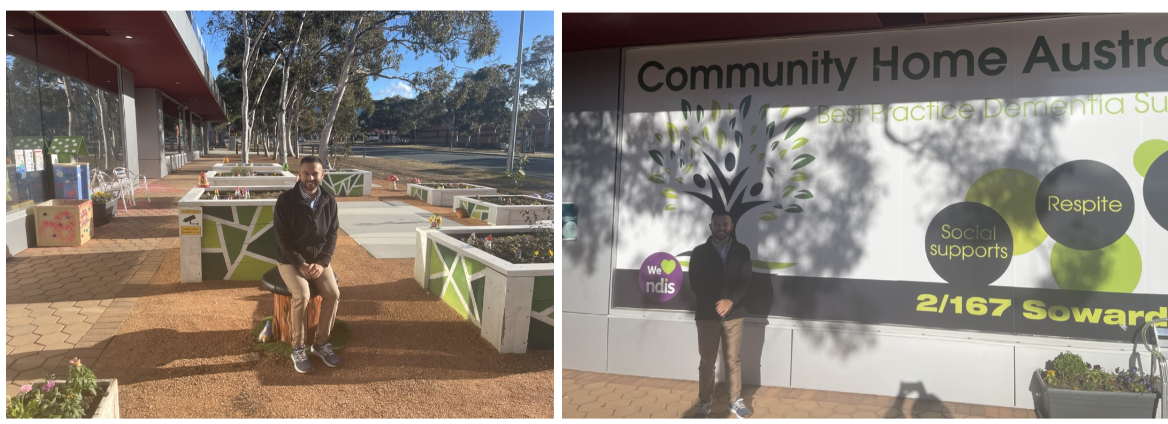
Club Kalina is a unique place where they have an open space for you to decide when and what to do. They have an arcade, arts/crafts, gym, piano, kids area, computer station, cafe area, and an incredible team that are all trained in dementia and receive continual training. In fact, I enjoyed how they were always looking for ways to inform the team about new methods, or a broader sense of doing certain things.
I appreciated the day center’s energy for the members creating the environment they envision. In fact, they are deciding where to go and when to go. For example, this person wanted to go on a walk and that is exactly what they did. They went on a walk with a staff member and then came back to the club. Club Kalina also has set up a partnership with a nearby school for intergenerational exchange. It warmed my heart to see how young children interacted with the members to ensure they are being heard and seen. This inevitably adds to the circle of life and breaks down the stigma that surrounds PLWD. It was such a unique moment to witness and see smiles across peoples faces for the community building being created.
I had the unique opportunity to talk to one guest who is in their beginning stages of dementia and I was deeply moved by our conversation. He mentioned how “we all have the same diagnosis yet we have different life stories. Here in this place they listen to those individual stories and do not just group us together.” I was moved by this as I heard so often from various providers around the world that this cannot be done, we must do group group people due to the staff shortage. Additionally, they had some students interning as part of their master’s program with them at Club Kalina. It is crucial to be able to train the next people in line and foster an environment for them to see that is different from the average environment in aged care. The master students were working on guides for each member where staff can know which group activities they like and what individual activities they like to do. How do we continue to build such effective and efficient spaces for people living with dementia? But moreso than that, partner with eager students who are willingly to support. By having such guides this has a ripple effect for the next person who cares for this person and might now know them.
Kambera House

Kambera House is a home embedded within the community. They are the first care home that I visited that embodies a home-like environment compared to other spaces I visited in my previous travels. In fact, it feels just like an ordinary home. They are in a neighborhood and in a way continues to pave the path of creating awareness within community and improving the overall stigma of the community.
I was intrigued to see how this care home had two separate kitchens to ensure not everyone is clustered into one space. It was three residents for each kitchen. Additionally, they created a specific space where your wheelchair does not inhibit you from washing a plate or cooking. I was deeply inspired by this. How do we create spaces where people are able to engage despite their disability? Community Home Australia does this so well and their team is well informed in how to handle this. From the moment I walked in at Club Kalina everyone was aware of what they were trying to accomplish. Each person has their own way of nurturing the environment they wish to create for people living with dementia.
Karingal House
Another space they have is Karingal Home. What an incredible model to have where people who are more independent are able to live in a home where someone is with them. I really enjoyed this opportunity and to live out the experience. Residents are not waken up at a certain time but they decide. It was incredible to see how when I accidentally dropped something the carer checked to make sure all was well because of the sensors and noise made. I am honored to have been able to stay overnight and live out the experience of being in an aged care home. It felt that I was simply staying overnight at a family’s home.
I was deeply impressed by the work that is being done here in this care home. They are following the rhythm of the individuals living there not being enforced to do certain tasks. Additionally, they are able to go to Club Kalina for a few hours to ensure the carer gets some rest. Again, how do we ensure we create some fluidity amongst the spaces we have. They have done this so beautifully that it improves the overall quality for both residents and carers.
Lastly, one thing that has stayed with me months since I visited CHA was the fact that they follow their guests into the hospital to provide support onsite. They want to ensure that the hospital staff treat their guests with dignity and respect. They know that the hospital staff will utilize sedatives and hence have a staff member there to help their guests with anything they need. That for me is what changes the equation to truly providing more person centered care and what it means to enter a care home. The opportunity for this organization to support someone till the very end. I will never forget walking into the hospital with four master’s students and myself included. The nurse at the hospital mentioned she’s never seen someone have so much support from an organization.
Nelligen House

I appreciated visiting this site that is meant for both families, guests, and employees. This site for me embodies what it means to continue living life and simply being. I loved how this felt like I was entering a home away from home.
They have some incredible ideas formulating and I am thrilled to have been able to witness the magic they are fostering amongst their staff and guests. They are hoping to use this space for more community interaction.
The way that CHA has setup their programming and fluidity across spaces offers a unique opportunity to ensure that people are reduced.
Final Remarks
A heartfelt thank you to the Community Home Australia Team and families for allowing me to visit you all and converse. I am deeply moved by the work that is being done here and how you are all adapting to the needs of the people who cross your path. You all are shifting the narrative of aging in Australia and I am excited for the future projects you all work on. I look forward to the next time our paths cross again.
My deepest gratitude to Dr. Rodney Jilek for being a trailblazer and reminding me that we can and must do better. So many people in Australia like other countries say it cannot be done, but Community Home Australia is a living example that it can be done. When you think it cannot be done inquire with others to imagine that it can be done.
