I woke up Monday morning eager to visit Village Landais after watching online videos and hearing so much about it through social media outlets.
Alas, I arrived at the village and was very emotional to see such a newly created space for older adults living with dementia. My grandmother passed away in January 2023, and she was part of my inspiration to visit a place like this to understand how we can replicate such a model on a smaller scale inside a home environment.
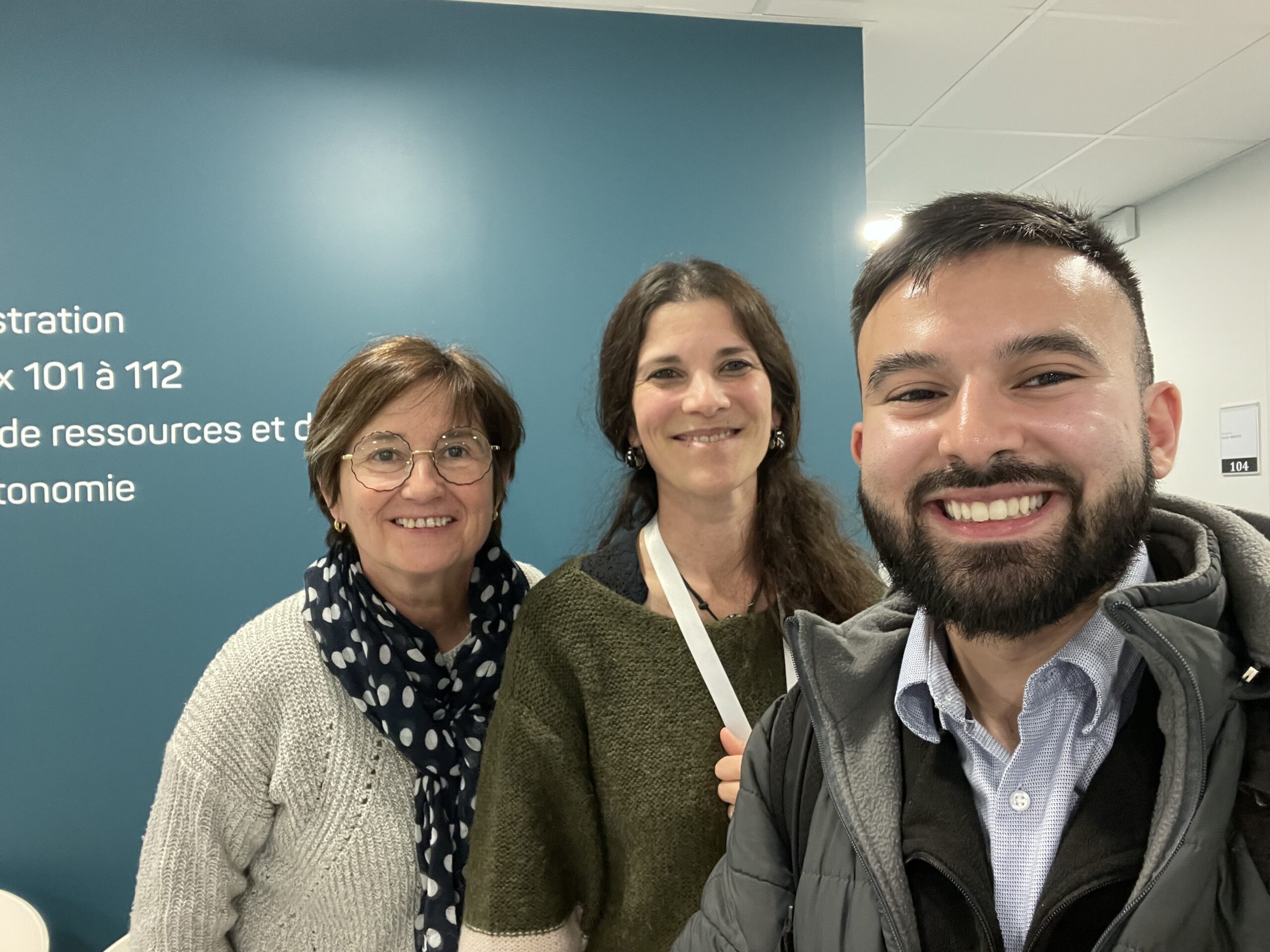
As I entered the doors, I loved how it was clear and transparent. When I was there, I was greeted by the receptionist. Then, I met Dr. Gaelle and a recent graduate in Healthcare Administration. After, we walked in the front doors to enter the village into “La Bastide”, which is the village center
“La Bastide” consisted of the salon, supermarket, cafe, auditorium, library, media services, and medical services. This space was separated from the houses to motivate people to walk around. The village was created to be multi-use and benefit the community by providing dental, audio, and visual support to name a few. Therefore, the Village is not only serving older adults there but also the neighborhood. How are we developing spaces to ensure they have a double purpose and invite the community inside? Beyond that, how are we bringing awareness of Alzheimer’s disease to others – by inviting community.
This facility is unique as it invites the outside world into these spaces. As I mentioned before in my reflections from Brazil, one facility there has thought beyond the resident but also the family by creating a play house for grandchildren or a swimming pool or party room for families.
We first saw a group of people doing cognitive stimulation, and it was a small group. In fact, it was three residents with two people leading the activity. I was amazed as they mentioned how they have older adults who can do so, and the others are in their homes with the caretaker. No one is forced to come to this space or participate if they do not desire.
We went to my favorite space, the library. Across my travels, I’ve been seeing the importance of having a library develop. How can the library be a space for both residents and community members? How can we ensure international mingling occurs? By having a library we are able to build that bridge from the outside world to the inside and ensure young children are able to come in. This space was innovative as it had a variety of books.
Additionally, they had a small park for the grandchildren of the villagers. How are we creating spaces to invite the community and international exchange? This touched me as the village considers not only the wellbeing of the older adult but the community/family of the resident.
Personal services such as hair salons continue to be important across my travels. They had a calming music facility where residents and community members could come in to get their hair down. Residents can go once a month as part of their service.
I also enjoyed how they had a room where seniors could pick games to play and a space to play Pétanque, again respecting the villager’s cultural values. They also had a supermarket, several gardens, and a farm. This idea of farm animals intrigues me because another house had two animals. I loved this because, typically, in LTCFs,, you do not see this. They keep adding to what I’ve seen, and thought should be included.
It started snowing as well, and I loved how seniors could experience this and not just see the snow but feel it. The balance between risk and liberty is something we always must access but should not limit our seniors. I also enjoyed how the village offered sufficient space to be able to walk around. One had an excellent amount of space to explore.
We then went to see where the residents lived and it was unique in that every resident had their room customized by themselves. I had the opportunity to visit two residents and see how they had photos and pictures and a clear view of the greenspace so natural light enters. Near the bed exists sensors to detect if a senior has fallen so a caretaker can come in and ensure all is well. What intrigued me was the sense of respect and how people knocked the door and asked if they could come in and not just barge in. Again, providing a sense of autonomy to the older adult. The bathroom space was also large. It was created to be accessible.
Each home has a kitchen where you can see the caretaker preparing the meals, and residents have the option to look. Additionally, they have a living room with an arts/crafts cabinet for something and a radio for music. I was deeply moved as the residents decided whether to go to the center to participate in certain activities. Otherwise, they are at home relaxing and crafting their plans. They can come and go as they choose. Again, this notion of autonomy, liberty, and choice arises that questions many nursing homes I saw. Yet, it affirms what the centenarians of Costa Rica taught me about their desire to keep their liberty.
A true person-centered model where this institution is not here to implement their ideas to the resident, but the residents are to them. I loved that no one wore a uniform as it builds a sense of community and family-like environment. I was amazed by Dr. Gazelle’s passion and love for her work as you can see that they see her as a doctor, but more than that as someone willing to listen and be there. That warmed my heart as in Brazil I witnessed how these incredible doctors build a similar space for their patients when they come.
With that, I was even more impressed by the palliative services as this revolutionized what others do. She mentioned how residents, depending on closeness and other factors, are informed of a resident’s passing and how they are offered counseling along with being able to write a note. Offering such a space touched me profoundly, as in all LTCFs that I’ve visited, they have told me how they try to avoid the topic with the rest of the residents.
I then had the opportunity to visit their Auditorium and, again, a space where the community could be invited. They showed me previous photos of events they had there and loved how we can ensure we create sustainable ways to bring organizations from the outside to the inside to host a workshop, bring awareness, and a space for community building.
Lastly, the unique thing they have here is the space where they can conduct research and have families stay. We must ensure we do internal research to do an internal assessment of how things are functioning and seek to improve the care we provide. It is only through reflection where that is possible.
All in all, I am deeply inspired by the work this village is doing and the knowledge they are contributing to the field of long-term care. We, as members of society, can learn from this and understand that another form of long-term care is possible. Together we can shift the narrative of aging around the world that meets our cultural values and beliefs.
Until the next time,
Luis Cordero
